
Panel
Unknown Artist
first half 19th century
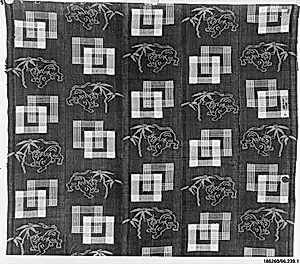
Medium
Cotton
Dimensions
72 x 65 in. (182.88 x 165.10 cm)
Classification
Textiles-Painted and Printed
Culture & Period
Japan · Edo period (1615–1868)
Department
Asian Art
Museum
Metropolitan Museum of Art, New York, NY
Credit
Seymour Fund, 1966
Accession Number
66.239.1
Rights
Public Domain
Tags
Art Historical Context
This striking cotton panel from Japan's Edo period (1615–1868), created in the first half of the 19th century, exemplifies era's vibrant textile arts. Measuring an impressive 72 x 65 inches, it likely served as a room divider, hanging screen, or decorative backdrop in a prosperous household, reflecting the period's economic boom and urban sophistication. During the Edo era, peace and stability fostered a flourishing market for affordable, bold textiles, often used in everyday interiors to bring nature indoors. Crafted using painted and printed techniques on cotton—a practical, breathable fabric—the panel features animal motifs, a staple in Japanese art symbolizing harmony with nature, folklore, or auspicious qualities. These methods, akin to stenciling (katazome) or hand-painting, allowed artisans to produce intricate designs efficiently for mass appeal. Though the artist remains unknown, such works highlight the anonymous mastery of Edo craftspeople, blending functionality with aesthetic delight. Acquired through the Seymour Fund in 1966, this piece at the Metropolitan Museum of Art offers a window into Japan's textile heritage, where everyday objects became canvases for cultural expression. Visitors will appreciate its scale and lively imagery, evoking the lively streets of old Edo.