
Panel
1675/1727
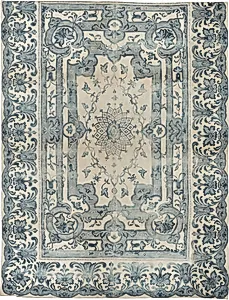
Medium
Cotton, plain weave; resist printed and painted
Dimensions
179.2 × 137.4 cm (70 1/2 × 54 1/8 in.)
Classification
textile
Department
Textiles
Museum
Art Institute of Chicago
Accession Number
153629
Rights
Public Domain
Art Historical Context
This striking textile panel, created in the style of Daniel Marot the Elder between 1675 and 1727, showcases the refined elegance of late Baroque design. Marot, a French Huguenot designer who worked extensively in the Netherlands and England, was celebrated for his ornate patterns that blended European symmetry with exotic motifs drawn from global trade. Though not by the master himself, this work captures his influence through its sophisticated composition, likely intended as a furnishing fabric for walls, beds, or screens in fashionable European interiors. Measuring over five feet tall, the panel is executed in cotton plain weave using resist printing and painting—a labor-intensive technique that allowed for crisp white areas against vibrant dyes. This method reflects the era’s booming cotton trade with India and the growing European fascination with printed textiles that could mimic more costly woven silks or tapestries. The Art Institute of Chicago’s example highlights how such panels brought color, pattern, and a sense of luxury into domestic spaces during the late seventeenth and early eighteenth centuries.