
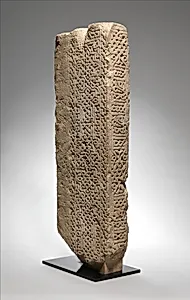
Panel with Geometric Pattern and Benedictory Inscriptions
Unknown Artist
late 13th–mid-14th century
Medium
Limestone; carved
Dimensions
H. 30 5/16 in. (77 cm) W. 11 in. (28 cm) D. 3 15/16 in. (10 cm)
Classification
Stone
Department
Islamic Art
Museum
Metropolitan Museum of Art, New York, NY
Credit
Purchase, Friends of Islamic Art Gifts, 2011
Accession Number
2011.182
Rights
Public Domain
Art Historical Context
This intricately carved limestone panel, to the late 13th to mid-14th century exemplifies the refined stonework of medieval Islamic art. Measuring about 30 inches tall and 11 inches wide, it features a repeating geometric pattern interwoven with benedictory inscriptions—phrases invoking blessings, likely from the Quran or pious invocations. Such panels were commonly used in architectural settings, adorning mosques, madrasas, or mausoleums, where they served both decorative and spiritual purposes. The geometric motifs, with their interlocking stars, polygons, and arabesques, reflect core principles of Islamic design: endless repetition symbolizing the infinite nature of God and the universe, while adhering to aniconism by avoiding human or animal figures. Carving these precise patterns into durable limestone required masterful stone masonry techniques, often achieved with chisels and abrasives for sharp reliefs that catch the light dramatically. Housed in the Metropolitan Museum of Art's Islamic Art department, this anonymous masterpiece highlights the cultural flourishing of the Islamic world during this era, blending mathematics, calligraphy, and devotion into timeless beauty. Visitors can appreciate how such artifacts bridged art and faith, inviting contemplation of the divine harmony in everyday stone.