
Papier: Fujiwara no Sadaie
ca. 1827
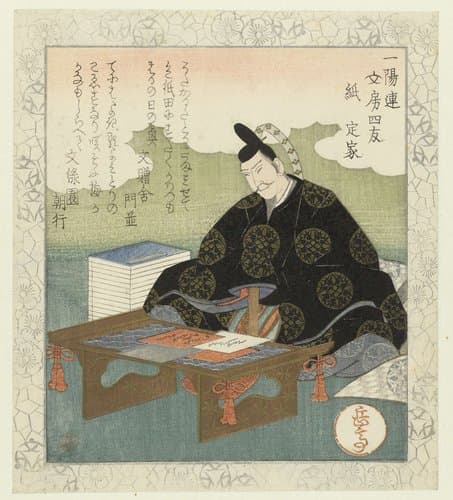
Medium
nishikie, with metallic pigments and tsuyazuri
Dimensions
209; 184
Rights
Public Domain
About this artwork
collector's mark, verso, stamped: Lugt 2228
Art Historical Context
Behold *Papier: Fujiwara noadaie*, a delicate surimono woodblock print Yashima Gakutei, crafted around 1827 during Japan's vibrant Edo period. Gakutei, an Osaka-based ukiyo master renowned for his poetic yakusha-e (actor portraits) and private commissions, pays homage here to Fujiwara no Sadaie—better known as Fujiwara noika—one of Japan's greatest waka poets of the Kamakura era. This intimate work, measuring just 209 × 184 mm, captures the refined elegance of classical literary figures, blending artistry with cultural reverence. The medium shines as a nishikie, or "brocade picture," a luxurious polychrome woodblock technique using up to 20 colors for jewel-like vibrancy. Gakutei's addition of metallic pigments and tsuyazuri—embossed, glossy effects mimicking lacquer—elevates the print's tactile allure, simulating the shimmer of fine paper or poetic scrolls. These innovations highlight the technical prowess of late Edo printers, reserved for elite patrons like poetry circles. On the verso, a collector's mark (Lugt 2228) from Frits Lugt's catalog attests to its esteemed provenance, linking this gem to global connoisseurs. For visitors, it offers a window into Japan's fusion of literature and printmaking, where everyday paper becomes a canvas for timeless beauty.
About the Artist
Yashima Gakutei · 1786–1868
Yashima Gakutei (c. 1786–1868), born in Osaka as the illegitimate son of a Tokugawa shogunate samurai named Hirata, adopted the name from his mother's subsequent marriage into the Yashima clan. Little is documented about his early years beyond these familial ties, but he pursued artistic training under the esteemed ukiyo-e masters Totoya Hokkei and Katsushika Hokusai, absorbing their precision in ...