
Papyrus Fragment
Unknown Artist
8th–9th century
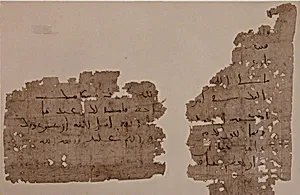
Medium
Ink on papyrus
Dimensions
H. 6 1/2 in. (16.5 cm) W. 9 13/16 in. (24.9 cm)
Classification
Codices
Department
Islamic Art
Museum
Metropolitan Museum of Art, New York, NY
Credit
Museum Accession
Accession Number
x.433
Rights
Public Domain
Tags
Art Historical Context
This delicate *Papyrus Fragment*, dating to the 8th–9th century, offers a rare glimpse into the early Islamic world of manuscript production. Crafted with ink on papyrus—a lightweight, plant-based material imported from Egypt—this modest piece measures just 6½ by 9⅞ inches. Housed in the Metropolitan Museum of Art's Department of Islamic Art and classified as part of a codex (an early book format), it exemplifies the transition from scrolls to bound pages in the Abbasid era, when knowledge flourished in centers like Baghdad and Cairo. The fragment's star is its exquisite Arabic calligraphy, a pinnacle of Islamic artistic expression where the written word was revered as a divine art form. Rendered in flowing script, the text likely preserves Quranic verses, legal texts, or poetry, showcasing the precision and rhythm essential to early Kufic or transitional styles. Papyrus, though fragile and eventually supplanted by paper from China, was prized for its smooth surface, allowing scribes to create works that bridged pre-Islamic traditions with the burgeoning Islamic golden age. As visitors, imagine scholars poring over such fragments by lamplight, their ink enduring centuries. This artifact not only highlights masterful technique but also the cultural reverence for the written word in shaping Islamic civilization.