
Papyrus Fragment
Unknown Artist
7th century
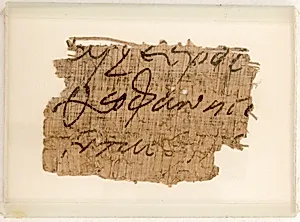
Medium
Papyrus and ink
Dimensions
Overall: 1 11/16 x 2 9/16 in. (4.3 x 6.5 cm) Framed: 2 1/2 x 3 1/2 in. (6.4 x 8.9 cm)
Classification
Papyrus
Culture
Coptic
Department
Medieval Art
Museum
Metropolitan Museum of Art, New York, NY
Credit
Rogers Fund, 1912
Accession Number
12.180.304
Rights
Public Domain
Tags
Art Historical Context
Nestled in the Metropolitan Museum of Art's Medieval collection, this delicate *Papyrus Fragment* from 7th-century Coptic Egypt measures just 1 11/16 x 2 9/16 inches, a tiny window into a vibrant Christian culture on the cusp of profound change. Acquired through the Rogers Fund in 2, it exemplifies the use of papyrus—ancient Egypt's lightweight, reed-based writing surface—as a medium for ink-scripted documents. Though the artist remains unknown, the fragment's survival highlights the ingenuity of Coptic scribes, who adapted Greco-Roman traditions to express their faith and administration amid the early Islamic conquests. Coptic culture, rooted in Egypt's Christian communities from the 4th to 12th centuries, produced such artifacts amid a blend of pharaonic, Byzantine, and emerging Arab influences. This papyrus likely served practical purposes—perhaps a contract, letter, or religious note—revealing daily literacy in a society where monasteries and churches were hubs of knowledge. Its modest ink calligraphy, executed with reed pens, underscores the unadorned functionality prized in Coptic documents, contrasting with the era's more ornate illuminated manuscripts. Today, this fragile survivor invites us to marvel at history's whispers: a testament to Coptic resilience and the enduring allure of papyrus, which outlasted stone in preserving voices from medieval Egypt. Peer closely—its small scale belies its big story.