
Part of Vase Handle
Unknown Artist
ca. 1390–1352 B.C.
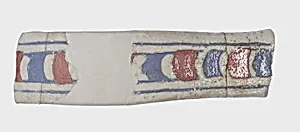
Medium
Faience, white with red and blue decoration
Dimensions
L. 8.5 cm (3 3/8 in)
Classification
Vase, handle fragment
Period
New Kingdom
Department
Egyptian Art
Museum
Metropolitan Museum of Art, New York, NY
Credit
Rogers Fund, 1911
Accession Number
11.215.497
Rights
Public Domain
Art Historical Context
This delicate fragment of a vase handle dating to around 1390–1352 B.C. during Egypt's New Kingdom (Dynasty 18), offers a glimpse into the opulent artistry of the reign of Amenhotep III, a pharaoh whose prosperous era saw grand temples and lavish royal commissions. From the Metropolitan Museum of Art's Egyptian Art collection, this—acquired through the Rogers Fund in 1911—once adorned a ceremonial or elite vessel, highlighting the Egyptians' mastery of everyday luxury in household and ritual objects. Crafted from faience, a signature Egyptian material made by molding quartz-based paste, firing it, and applying vibrant glazes, the handle gleams in white with striking red and blue decoration. At just 8.5 cm long, it exemplifies faience's appeal: its glassy sheen mimicked semiprecious stones like turquoise and lapis lazuli, making splendor accessible beyond gold or silver. These bold colors not only enhanced beauty but symbolized vitality and divine protection in ancient beliefs. As a survivor from an age of imperial might and artistic innovation, this handle reminds us how even broken bits of pottery carry stories of ancient lives—perhaps holding scented oils or wine for feasts honoring the gods. A testament to enduring craftsmanship, it invites us to marvel at Egypt's blend of function, faith, and finesse.