
Passage of Matter Through Matter
July 27, 1878
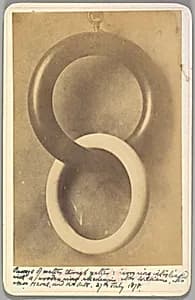
Medium
Albumen silver print from glass negative
Dimensions
Image: 14.3 x 9.5 cm (5 5/8 x 3 3/4 in.)
Classification
Photographs
Department
Photographs
Museum
Metropolitan Museum of Art, New York, NY
Credit
Gilman Collection, Gift of The Howard Gilman Foundation, 2005
Accession Number
2005.100.203
Rights
Public Domain
Tags
Art Historical Context
Charles Williams's "Passage of Matter Through Matter," created on July 27, 1878 offers a fascinating glimpse into experimental spirit of early photography. This intimate albumen silver print, measuring just 14.3 by 9.5 centimeters, was produced from a glass negative—a process that required careful preparation and precise timing. Now part of the Metropolitan Museum of Art's Photographs collection through the Gilman Collection, it reflects the era's growing interest in capturing fleeting or conceptual moments on paper. Albumen prints dominated photographic practice in the 1870s, valued for their rich tonal gradations and ability to render fine details. The medium's reliance on egg-white coatings and silver chemistry gave images a distinctive warmth and clarity, allowing artists like Williams to explore both scientific observation and visual illusion. The work's title and tag referencing rings hint at themes of transformation or circular forms, inviting viewers to consider how photography could document ideas beyond the visible world. Acquired by the museum in 2005 as a gift from the Howard Gilman Foundation, this small print underscores photography's role in blending art, science, and curiosity during the Victorian period.
About the Artist
Charles Williams · 1797–1830
Charles Williams (1797–1830) was a British caricaturist and printmaker who worked in London during the final decades of the Georgian era, producing satirical prints for the thriving trade in political and social caricature that flourished in the city's print shops. He worked in the tradition established by such masters as James Gillray and Thomas Rowlandson, whose biting visual commentary on polit...