
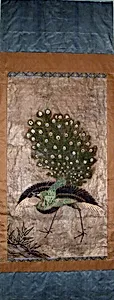
Peacock
Unknown Artist
17th century
Medium
Hanging scroll; ink and color on paper
Dimensions
54 7/8 x 30 in. (139.4 x 78.4 cm)
Classification
Paintings
Culture & Period
Japan · Edo period (1615–1868)
Department
Asian Art
Museum
Metropolitan Museum of Art, New York, NY
Credit
H. O. Havemeyer Collection, Bequest of Mrs. H. O. Havemeyer, 1929
Accession Number
29.100.474
Rights
Public Domain
Tags
Art Historical Context
This exquisite hanging scroll, titled *Peacock* and created by an unknown Japanese artist in the 17 century during the Edo period (1615–1868), captures the majestic bird in vibrant ink and color on paper. Measuring an impressive 54 78 x 30 inches, it exemplifies the traditional format of hanging scrolls, which were designed to be unrolled and displayed seasonally in homes, temples, or tea houses, allowing viewers to savor their beauty in intimate settings. In the peaceful Edo era under Tokugawa rule, Japanese art flourished with a focus on nature's elegance, and bird subjects like the peacock symbolized grace, exotic splendor, and the transient beauty of life—echoing Zen ideals. The artist's masterful use of ink for fine feathers and vivid colors for iridescent plumage highlights techniques rooted in Chinese literati traditions adapted to Japanese tastes, creating a sense of poised vitality. Now part of the Metropolitan Museum of Art's H. O. Havemeyer Collection (bequest of 1929), this work invites us to appreciate Edo Japan's artistic refinement, where everyday contemplation of nature's wonders brought profound joy.