
Pear
Unknown Artist
18th century
Medium
Tin-glazed earthenware
Dimensions
Overall (approximate): 2 1/2 × 3 1/2 in. (6.4 × 8.9 cm)
Classification
Ceramics-Pottery
Culture
Dutch, Delft
Department
European Sculpture and Decorative Arts
Museum
Metropolitan Museum of Art, New York, NY
Credit
Gift of Henry G. Marquand, 1894
Accession Number
94.4.39
Rights
Public Domain
Tags
Art Historical Context
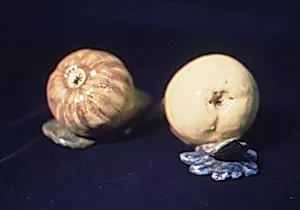
This charming 18th-century tin-gl earthenware "Pear" Delft, Netherlands, captures the whimsical spirit of Dutch decorative arts. Measuring just 2½ × 3½ inches, this petite ceramic sculpture mimics the shape and texture of a ripe pear, showcasing the potters' skill in creating trompe l'oeil effects—optical illusions designed to fool the eye. Produced in Delft, a hub of ceramic innovation, it exemplifies Delftware, a tin-glazed earthenware that provided an affordable alternative to expensive Chinese porcelain during Europe's Age of Exploration. The tin glaze, applied before firing and decorated with vibrant overglaze colors, yields a glossy, durable surface that allowed for intricate detailing and vivid hues, often in blues, whites, and earthy tones. These faux fruit models were popular in affluent Dutch households as playful table ornaments or collector's items, reflecting the era's delight in nature-inspired motifs amid growing global trade in exotic goods. Acquired as a gift from Henry G. Marquand in 1894, this piece now graces the Metropolitan Museum of Art's European Sculpture and Decorative Arts collection. It invites visitors to appreciate the everyday artistry of Delft craftsmen, blending utility, humor, and technical mastery in a single, deceptively simple form.