
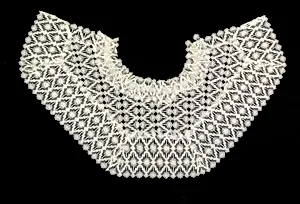
Pelerine
Unknown Artist
1835–40
Medium
Silk
Classification
Pelerine
Culture
American
Department
Costume Institute
Museum
Metropolitan Museum of Art, New York, NY
Credit
Brooklyn Museum Costume Collection at The Metropolitan Museum of Art, Gift of the Brooklyn Museum, 2009; Robert B. Woodward Memorial Fund, 1921
Accession Number
2009.300.6259
Rights
Public Domain
Art Historical Context
Step into the refined world of 1830s American fashion with *Pelerine*, a delicate silk garment from the Costume at The Metropolitan Museum of Art. Dating to 1835–40, this accessory exemplifies the era's penchant for romantic, layered silhouettes. A pelerine was a stylish shoulder cape or shawl typically featuring points at the front and back, worn over bodices or dresses to add elegance and warmth without restricting movement. Crafted from luxurious silk, the medium underscores its status as a high-end item, likely reserved for affluent women. Silk's sheen and drape captured light beautifully, enhancing the soft, voluminous lines of mid-19th-century gowns with their gigot sleeves and full skirts. As an American piece, it reflects how U.S. fashion adapted European trends—particularly from Paris—while embracing local tastes for practicality and ornamentation. Originally part of the Brooklyn Museum Costume Collection (gifted to the Met in 2009 via the Robert B. Woodward Memorial Fund), *Pelerine* offers a tangible glimpse into everyday luxury. It highlights women's evolving roles in a burgeoning industrial America, where such garments blended aspiration with accessibility, preserving the grace of a transformative decade.