
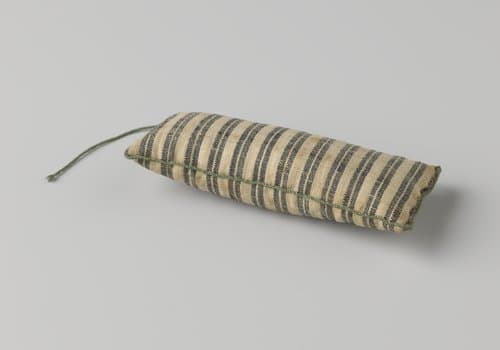
Peluwkussen, blauw-wit gestreept, omzoomd met een groen koord
ca. 1750
Medium
linen (material)
Dimensions
17; 3; 4
Rights
Public Domain
About this artwork
breedte 4 cm x dikte 3 cm x lengte 17 cm
Art Historical Context
Step into the intimate world of 18th Dutch domestic life with this charming *Peluwkussen*, or needle cushion, dating to around 1750. Crafted anonymously from linen, this petite object measures just 4 cm wide, 3 cm thick, and 17 cm long—perfectly sized for holding pins and needles during sewing tasks. Its blue-and-white stripes evoke the crisp, patterned textiles popular in Dutch households, while the green cord border adds a tidy, decorative flourish, showcasing everyday craftsmanship. Linen, a staple material in the Netherlands' prosperous Golden Age aftermath, was prized for its durability and breathability, ideal for utilitarian items like this. Such cushions were essential tools for women managing home-based textile work, from mending clothes to creating intricate samplers. Though small and anonymous, it reflects the skilled, uncredited labor that sustained family life amid the era's trade-driven economy. Today, this unassuming artifact offers a tactile glimpse into pre-industrial routines, highlighting how simple designs blended function with subtle beauty. In museum collections, it underscores the cultural value of vernacular textiles, preserving stories of ordinary hands at work.
About the Artist
anonymous
In the vast tapestry of art history, "Anonymous" stands not as a singular individual but as a collective designation for countless unidentified creators whose works have endured across millennia. These artists, spanning prehistoric cave painters to medieval illuminators and folk craftsmen, produced the foundational layers of human visual culture. Prior to the Renaissance, when individual fame emer...