
Pen Box (Qalamdan)
Unknown Artist
19th century
Medium
Papier-maché; painted, gilded, and lacquered
Dimensions
L. 9 in. (22.9 cm) D. 1 1/4 in. (3.2 cm)
Classification
Lacquer
Department
Islamic Art
Museum
Metropolitan Museum of Art, New York, NY
Credit
Purchase, Josephine L. Berger Nadler, and Paul Anavian and Massoud Nader Gifts, 2008
Accession Number
2008.247a, b
Rights
Public Domain
Tags
Art Historical Context
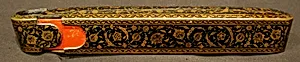
This exquisite **Pen Box (Qdan)** from 19th-century Iran showcases the pinnacle of Islamic lacquerware artistry. Crafted from papier-maché—a lightweight yet sturdy material favored for its versatility—the box measures a slender 9 inches long and 1¼ inches in diameter, designed to hold reed pens (qalam) essential for calligraphy, poetry, and scholarship in Persian culture. Its surface is masterfully painted, gilded, and lacquered, creating luminous, jewel-like finish that protected the intricate decorations while allowing for vibrant colors and fine details. The unknown artist's floral motifs, a hallmark of Qajar-period (late 18th–early 20th century) Persian art, bloom across the box in delicate patterns, symbolizing paradise gardens central to Islamic aesthetics. Gilding adds a golden glow, evoking luxury and the opulence of royal workshops in Tehran or Shiraz. This technique, refined over centuries, transformed humble papier-maché into coveted objects blending utility with beauty. Acquired by the Metropolitan Museum of Art in 2008, this qalamdan highlights everyday elegance in Islamic society, where even scholarly tools became canvases for artistic expression. Visitors will appreciate how it bridges function and fantasy, inviting a closer look at the enduring allure of Persian craftsmanship.