
Pendant
Unknown Artist
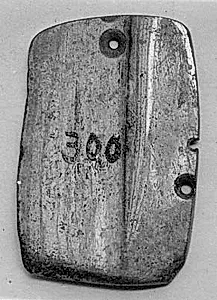
Medium
Jadeite
Dimensions
H. 1 5/8 in. (4.1 cm); W. 1 1/16 in. (2.7 cm); D. 1 1/8 in. (2.8 cm)
Classification
Jade
Culture
Guatemala
Department
Asian Art
Museum
Metropolitan Museum of Art, New York, NY
Credit
Gift of Heber R. Bishop, 1902
Accession Number
02.18.300
Rights
Public Domain
Art Historical Context
This delicate jadeite pendant, originating from ancient Guatemala, exemplifies the masterful craftsmanship of pre-Columbian Mesoamerican artisans. Measuring just 1⅝ inches high, 1¹⁄₁₆ inches wide, and 1⅛ inches deep, its compact form suggests it was worn as personal adornment, perhaps suspended from a cord around the neck. Crafted from jadeite—a vivid green, exceptionally hard stone prized more highly than gold in many indigenous cultures—the pendant's creation demanded immense skill, as carving this resilient material required specialized tools like abrasives and bow drills. In Guatemalan cultures, such as those of the Maya, jadeite held profound spiritual and social significance, symbolizing life, fertility, and elite status. Often sourced from distant Guatemalan highlands, these pendants were reserved for nobility and ritual use, embodying connections to the divine and natural world. Though the exact date and artist remain unknown, the piece reflects enduring artistic traditions spanning centuries before European contact. Acquired as part of Heber R. Bishop's renowned jade collection and gifted to the Metropolitan Museum of Art in 1902, this pendant now resides in the Asian Art department, highlighting cross-cultural appreciation for jade's allure. Visitors are invited to marvel at its luster, a timeless testament to Guatemala's artistic legacy.