
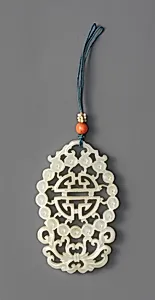
清中期 玉團壽紋佩|Pendant
Unknown Artist
18th–19th century
Medium
Jade (nephrite)
Dimensions
H. 2 1/2 in. (6.4 cm); W. 1 9/16 in. (4 cm); D. 3/16 in. (0.5 cm)
Classification
Jade
Culture & Period
China · Qing dynasty (1644–1911)
Department
Asian Art
Museum
Metropolitan Museum of Art, New York, NY
Credit
Gift of Heber R. Bishop, 1902
Accession Number
02.18.574
Rights
Public Domain
Art Historical Context
This exquisite jade pendant, crafted during the mid-Qing dynasty (18th–19th century exemplifies the refined artistry of Chinese jade carving. Made from nephrite—a durable, translucent white-to-green stone revered in China for millennia—the piece measures a delicate 2½ inches high and features intricate "tuán shòu wén" (round longevity motifs). Likely depicting stylized bats or cloud patterns symbolizing eternal life (shòu), it was designed as a personal ornament, suspended from belts or necklaces by the elite. In Qing imperial culture, jade embodied purity, immortality, and moral virtue, often gifted for auspicious occasions. Artisans employed masterful techniques like incising and low-relief carving to achieve smooth, luminous surfaces, highlighting the stone's natural veining. This pendant reflects the dynasty's peak in jade production, when workshops in Liangshan and Hetian supplied the court with luxurious accessories blending functionality and symbolism. A generous gift to the Metropolitan Museum of Art from Heber R. Bishop in 1902, it now graces the Asian Art collection, inviting visitors to appreciate the timeless elegance of Qing craftsmanship and its enduring cultural resonance.