
Perseus and Andromeda
Unknown Artist
ca. 1600
Medium
Boxwood
Dimensions
Overall: 5 3/4 × 6 1/4 in. (14.6 × 15.9 cm)
Classification
Sculpture-Miniature
Culture
Southern German
Department
European Sculpture and Decorative Arts
Museum
Metropolitan Museum of Art, New York, NY
Credit
Rogers Fund, 1909
Accession Number
09.162
Rights
Public Domain
Tags
Art Historical Context
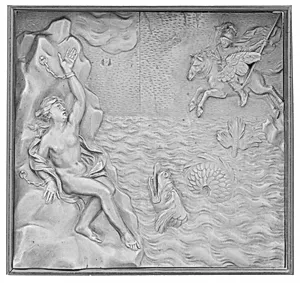
This exquisite miniature sculpture, *Perseus and Andromeda carved from boxwood around1600 by an unknown German artist, captures a dramatic moment from classical mythology. Perseus, the heroide Pegasus, rescues the chained princessromeda from a sea monster embodying themes of heroism and intervention popular in Renaissance-era art. At just 5 3/4 × 6 1/4 inches, its diminutive scale belies the astonishing level of detail, from the rippling muscles and flowing drapery to the dynamic interplay of figures against a rocky seascape. Boxwood, a dense and fine-grained hardwood, was the ideal medium for such virtuoso micro-carvings in Southern Germany during the late 16th and early 17th centuries. Artisans in workshops like those in Augsburg or Ulm honed techniques to render intricate narratives in pocket-sized formats, turning these objects into coveted collector's items for the elite. The sculpture's precision highlights the era's technical mastery, where tools like fine chisels and magnification lenses allowed for lifelike textures and depth in miniature. Acquired through the Rogers Fund in 1909 and housed in The Metropolitan Museum of Art's European Sculpture and Decorative Arts department, this piece exemplifies the cultural prestige of mythological subjects in Northern European decorative arts. It invites visitors to marvel at how such tiny works packed grand stories, bridging ancient myths with the craftsmanship of the Baroque threshold.