
Pesach
1522
Medium
paper
Dimensions
85; 60
Rights
Public Domain
About this artwork
collector's mark: Lugt 240
Art Historical Context
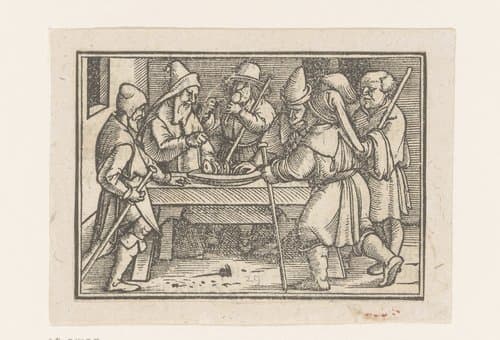
**Pesach (1522)** This delicate anonymous work, titled *Pesach*—Hebrew for Passover—dates to 1522 and measures just 60mm high by 85mm wide, on paper. Created during the early Renaissance in Europe, its diminutive scale suggests it may have been a miniature illustration, perhaps from a prayer book or festival-related manuscript, evoking the Jewish commemoration of the Exodus from Egypt. Such small-scale works were prized for their portability and intimate devotional use amid a time of religious upheaval, including the dawn of the Protestant Reformation. The medium of paper highlights 16th-century advancements in accessible artistry, allowing for fine details in what was likely ink or watercolor. Passover imagery often features symbolic motifs like the Seder plate or matzah, underscoring themes of liberation and renewal central to Jewish tradition. Its survival speaks to the resilience of cultural artifacts from this era. Bearing the collector's mark Lugt 240 (attributed to Eugène Dutuit, a 19th-century French connoisseur), *Pesach* boasts notable provenance, linking it to esteemed European collections. This tiny treasure invites visitors to ponder the personal faith and artistry preserved across centuries.
About the Artist
anonymous
In the vast tapestry of art history, "Anonymous" stands not as a singular individual but as a collective designation for countless unidentified creators whose works have endured across millennia. These artists, spanning prehistoric cave painters to medieval illuminators and folk craftsmen, produced the foundational layers of human visual culture. Prior to the Renaissance, when individual fame emer...