
Pest in Duitsland
Medium
striking (metalworking)
Dimensions
5.2; 4.5; 29.58
Rights
Public Domain
About this artwork
Gift of J.M. van Gelder-Nijhoff
Art Historical Context
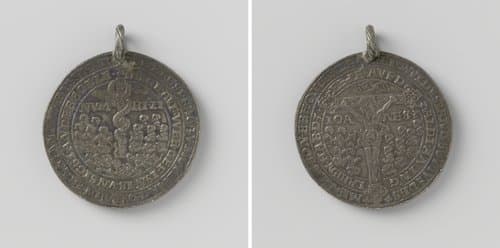
### Pest in Duitsland Crafted in 1528 by the German medallist Ulrich Gebhart, known as Utz, *Pest in Duitsland* (Plague in Germany) is striking example of early 16th-century metalworking. This petite artifact, measuring just 5.2 cm in diameter, was produced using the striking technique—hammering a metal blank between engraved dies to create a raised design. Such medals were prized Renaissance collectibles, blending artistry with historical commemoration, much like miniature sculptures in precious metal. The title evokes the devastating plague outbreaks that ravaged German cities during the 1520s, a time of social upheaval amid the Protestant Reformation. Ulrich Gebhart, active in Augsburg, specialized in portrait and event medals that captured the era's triumphs and tragedies. This piece likely serves as a poignant memento mori, reminding viewers of mortality in an age when bubonic plague claimed countless lives, fostering reflection on human fragility. Generously donated by J.M. van Gelder-Nijhoff, *Pest in Duitsland* highlights the technical precision of struck medals, which allowed for intricate details on a tiny scale. For visitors, it offers a tangible link to Reformation-era Germany, where art intertwined with life's harsh realities.