
Petticoat
Unknown Artist
mid-18th century
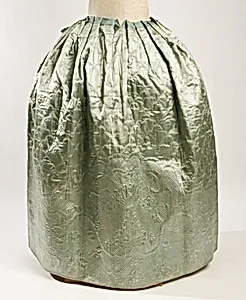
Medium
silk
Classification
Petticoat
Culture
American or European
Department
Costume Institute
Museum
Metropolitan Museum of Art, New York, NY
Credit
Bequest of Maria P. James, 1910
Accession Number
11.60.220
Rights
Public Domain
Art Historical Context
Step into the opulent world of 18-century fashion with this elegant silk petticoat from the mid-1700s. As an essential undergarment, it would have been worn beneath expansive skirts to create the wide-hipped silhouettes iconic of the Rococo era, adding volume and graceful sway to a lady's gown. Crafted from luxurious silk—likely imported via thriving transatlantic trade routes—this piece whispers of the era's social aspirations, where such fine fabrics signaled wealth and refinement, whether in European courts or burgeoning American colonies. The petticoat's unknown maker highlights the collaborative artistry of period costume-making, blending weaving expertise with tailoring precision. Silk's shimmering sheen and durability made it a prized medium, often hand-stitched with intricate pleats or padding for structure. Housed in the Metropolitan Museum of Art's Costume Institute, it arrived through the generous 1910 bequest of Maria P. James, preserving a tangible link to lives shaped by fashion's subtle power. Though its exact origins—American or European—remain mysterious, this petticoat invites us to ponder the women who wore it: their daily rituals, dances, and dreams beneath layers of silk. A testament to fashion's role in cultural identity, it reminds us how clothing once sculpted not just bodies, but societies.