
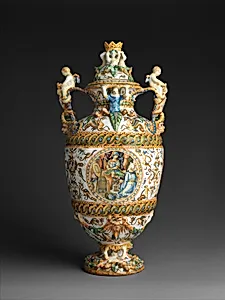
Pharmacy jar with subjects from The Campaigns of Julius Caesar
1580–81
Medium
Maiolica (tin-glazed earthenware)
Dimensions
Overall (confirmed): 25 3/16 × 12 3/4 × 11 3/4 in., 20 lb. (64 × 32.4 × 29.8 cm, 9.1 kg)
Classification
Ceramics-Pottery
Culture
Italian, Urbino
Department
European Sculpture and Decorative Arts
Museum
Metropolitan Museum of Art, New York, NY
Credit
The Friedsam Collection, Bequest of Michael Friedsam, 1931
Accession Number
32.100.377a, b
Rights
Public Domain
Tags
Art Historical Context
This magnificent pharmacy jar, crafted by the renowned Patanazzi Family inino, Italy, around 1580–81, exemplifies the pinnacle of Renaissance maiolica production. Standing over two feet tall and weighing 20 pounds, this tin-glazed earthenware vessel designed to store apothecary medicines, a common luxury item for Europe's elite pharmacies. Urbino, a thriving center of ceramic artistry, produced such jars with vibrant, opaque glazes that allowed for intricate, colorful designs—far beyond mere utility, transforming them into display pieces blending function and fine art. Adorned with scenes from *The Campaigns of Julius Caesar*, the jar bursts with dynamic motifs: soldiers in battle, playful grotesques, birds, Cupid, and mythical mermaids. This istoriato style—narrative painting on ceramics—showcases the Patanazzis' mastery of fine-line drawing and vivid enamel hues, drawing from classical antiquity to evoke Rome's imperial glory during the late 16th century's renewed fascination with ancient history. Today, housed in The Metropolitan Museum of Art as part of The Friedsam Collection, this jar highlights Italian decorative arts' cultural prestige, bridging pharmacology, mythology, and Renaissance humanism in a single, awe-inspiring object.