
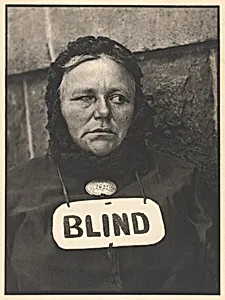
Photograph--New York
1916, printed 1917
Medium
photogravure
Dimensions
image: 22.3 x 16.7 cm (8 3/4 x 6 9/16 in.) sheet: 29.8 x 20.7 cm (11 3/4 x 8 1/8 in.)
Classification
Photograph
Department
CPH
Museum
National Gallery of Art, Washington, D.C.
Credit
Gift of Mary and David Robinson
Accession Number
1995.35.21
Rights
Public Domain
Art Historical Context
Paul Strand's *Photograph—New York* (1916, printed 7) captures the raw energy of early 20th-century Manhattan through the lens of a pioneering modernist photographer. Printed as a photogravure—a meticulous intaglio process that translates photographic negatives onto copper plates for richly toned, velvety prints—this work exemplifies the era's push to elevate photography as fine art. At 22.3 x 16.7 cm, its intimate scale draws viewers into the geometric interplay of urban forms, likely evoking the towering structures and shadows of New York's bustling streets. Strand, influenced by Alfred Stieglitz's Photo-Secession circle, broke from pictorialist softness in 1916 with his "straight photography" approach—unmanipulated images celebrating abstraction and precision. This shift marked a turning point, aligning photography with avant-garde movements like Precisionism and Cubism. Amid World War I and America's industrial boom, Strand's cityscapes transformed everyday architecture into bold compositions, reflecting modernity's dynamism. Now in the National Gallery of Art through the generous gift of Mary and David Robinson, this photogravure highlights the medium's enduring appeal for its subtle gradations and depth, inviting visitors to rediscover New York's visual poetry.
About the Artist
Paul Strand · 1890–1976
Paul Strand (1890–1976), born Nathaniel Paul Stransky in Brooklyn, New York, to Bohemian immigrant parents Jacob and Matilda Stransky, discovered photography at age twelve with a camera gifted by his father. Enrolled at the progressive Ethical Culture Fieldston School, he studied under documentary photographer Lewis W. Hine and critic Charles Caffin from 1904 to 1909, where Hine instilled a commit...