
画本虫撰|Picture Book of Crawling Creatures (The Insect Book) (Ehon mushi erami)
probably 1823 (later edition)
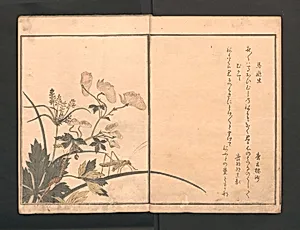
Medium
One from a set of two polychrome woodblock printed books; ink and color on paper
Dimensions
Overall: 9 15/16 × 7 3/16 in. (25.2 × 18.3 cm)
Classification
Illustrated Books
Culture & Period
Japan · Edo period (1615–1868)
Department
Asian Art
Museum
Metropolitan Museum of Art, New York, NY
Credit
Rogers Fund, 1918
Accession Number
JIB44a
Rights
Public Domain
Tags
Art Historical Context
Step into the enchanting world of Edo-period Japan with *Ehon mushi erami* (Picture Book of Crawling Creatures), a masterful polychrome woodblock-printed by Kitagawa Utamaro (3–1806). Though this is a later edition from around 1823, it Utamaro's signature ukiyo-e style— for its exquisite detail and vibrant hues—showcasing an array of insects amid blooming flowers. These delicate creatures, from beetles to butterflies, are rendered with scientific precision and poetic grace, reflecting the era's fascination with nature's fleeting beauty. Woodblock printing, a pinnacle of Japanese craftsmanship, allowed for intricate layering of ink and color on paper, producing luminous pages that blend artistry with subtle observation. Measuring about 10 by 7 inches, this volume from a set of two exemplifies *ehon* (picture books), which merged illustration and text to educate and delight. In Edo Japan (1615–1868), insects symbolized the seasons and life's transience, echoing haiku traditions and Zen mindfulness. Housed in the Metropolitan Museum of Art's Asian Art collection (acquired via Rogers Fund, 1918), *The Insect Book* highlights Utamaro's versatility beyond his famed bijin-ga (beautiful women) prints. It's a window into a cultured society's harmony with the natural world, inviting visitors to marvel at tiny lives magnified through genius.
About the Artist
Kitagawa Utamaro · 1753–1806
Kitagawa Utamaro (c. 1753-1806) was one of the most celebrated masters of ukiyo-e woodblock printing, revolutionizing the art of bijin-ga (pictures of beautiful women) during Japan's Edo period. Born Kitagawa Ichitaro, his early life remains shrouded in mystery, with conflicting accounts placing his birth in Kyoto, Osaka, Yoshiwara in Edo (modern Tokyo), or Kawagoe in Musashi Province. Under the t...