
絵本四季花|Picture Book on Flowers of the Four Seasons (Ehon shiki no hana) 絵本四季花
Medium
Set of two woodblock printed books; ink and color on paper
Dimensions
each: 8 1/2 × 6 1/16 in. (21.6 × 15.4 cm)
Classification
Illustrated Books
Culture & Period
Japan · Edo period (1615–1868)
Department
Asian Art
Museum
Metropolitan Museum of Art, New York, NY
Credit
Purchase, Mary and James G. Wallach Foundation Gift, 2013
Accession Number
2013.854a, b
Rights
Public Domain
Tags
Art Historical Context
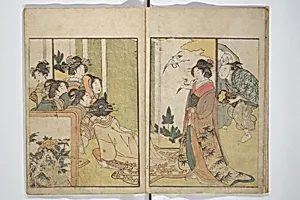
Step into the vibrant world of Edo-period Japan with *Picture Book on Flowers of the Four SeasonsEhon shiki no hana)*, a enchanting set of two woodblock books created by master ukiyo-e artist Kit Utamaro in 1801. Each compact volume, measuring just 8½ 6⅛ inches, bursts with ink and color on, showcasing delicate flowers across spring, summer, autumn, and winter, accompanied by birds, graceful women, and elegant men.amaro, celebrated for his bijin-ga (images of beautiful women), infuses these pages with poetic harmony, blending human figures seamlessly into nature's cycles. Woodblock printing, a pinnacle of Japanese craftsmanship, allowed for exquisite detail and mass production, making ehon like this accessible treasures for scholars and enthusiasts. During the Edo period (1615–1868), such illustrated books flourished amid urban prosperity and a booming print culture, capturing the fleeting beauty of seasonal blooms—a core theme in Japanese aesthetics symbolizing impermanence (mono no aware). This rare work, now in the Metropolitan Museum of Art's Asian Art collection (Purchase, Mary and James G. Wallach Foundation Gift, 2013), highlights Utamaro's genius for color gradation and composition, offering visitors a window into 19th-century Japan's refined appreciation for nature and humanity intertwined.
About the Artist
Kitagawa Utamaro 喜多川歌麿 (Japanese) · 1754 –1806
Japanese, ca. 1754–1806