
Piece
Unknown Artist
18th–19th century
Medium
Silk
Dimensions
5 1/4 x 3 in. (13.34 x 7.62 cm)
Classification
Textiles-Woven
Culture & Period
Japan · Edo period (1615–1868)
Department
Asian Art
Museum
Metropolitan Museum of Art, New York, NY
Credit
Gift of Mr. and Mrs. H. O. Havemeyer, 1896
Accession Number
96.14.118
Rights
Public Domain
Art Historical Context
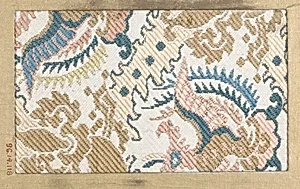
This delicate silk textile fragment, simply titled *Piece*, hails from Japan's Edo period (1615–1868), a time of relative peace and cultural flourishing under the Tokugawa shogunate. Measuring just 5¼ x 3 inches, this small woven artwork exemplifies the exquisite craftsmanship of Japanese textile artisans during the 18th–19th centuries. Though created by an unknown artist, it reflects the era's mastery of silk weaving, where fine threads were meticulously interlaced to produce luxurious fabrics prized for clothing, furnishings, and ceremonial items. Edo-period textiles were more than utilitarian; they embodied Japan's sophisticated aesthetic of refined simplicity and natural motifs, often featuring subtle patterns achieved through complex loom techniques. Silk, derived from silkworms cultivated across the archipelago, symbolized wealth and status, with weaving methods like *kasuri* (ikat) or supplementary weft adding depth and texture. This piece, classified as a woven textile in the Asian Art department, offers a glimpse into everyday artistry that influenced global fashion and design. Generously gifted to the Metropolitan Museum of Art in 1896 by Mr. and Mrs. H. O. Havemeyer, renowned collectors of Asian treasures, this fragment invites visitors to appreciate the enduring elegance of Japanese craft traditions. Up close, its compact scale reveals the patience and precision of Edo artisans, bridging centuries of cultural heritage.