
Piece
Unknown Artist
18th–19th century
Medium
Silk
Dimensions
13 1/4 x 8 in. (33.66 x 20.32 cm)
Classification
Textiles-Woven
Culture & Period
Japan · Edo (1615–1868)
Department
Asian Art
Museum
Metropolitan Museum of Art, New York, NY
Credit
Gift of Mr. and Mrs. H. O. Havemeyer, 1896
Accession Number
96.14.163
Rights
Public Domain
Tags
Art Historical Context
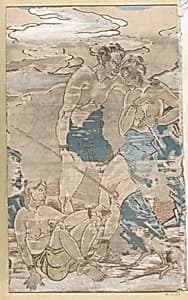
This exquisite silk textile fragment, titled simply *Piece*, hails from Japan during the Edo period (1615–1868), a time of relative peace and cultural flourishing. Woven in the 18th or 19th century, it measures a compact 13¼ x 8 inches, suggesting it may be a remnant from a larger garment like a kimono or obi sash. The motifs of animals and men reflect everyday life or folklore, common in Japanese textiles that celebrated nature and human activity. Silk weaving reached artistic heights in Edo Japan, where artisans employed sophisticated looms to create intricate patterns with dyed threads. This medium was prized for its luster and durability, often adorning the clothing of samurai, merchants, and commoners alike. Such pieces highlight Japan's mastery of sericulture—silk production—and the era's vibrant textile trade, which influenced fashion across social classes. A generous gift from Mr. and Mrs. H. O. Havemeyer in 1896, this work now graces the Metropolitan Museum of Art's Asian Art Department. It offers visitors a tactile glimpse into Edo Japan's craftsmanship, where every thread wove stories of harmony between humans and the natural world.