
Piece
Unknown Artist
18th–19th century
Medium
Silk
Dimensions
7 3/4 x 3 3/4 in. (19.68 x 9.53 cm)
Classification
Textiles-Woven
Culture & Period
Japan · Edo (1615–1868)
Department
Asian Art
Museum
Metropolitan Museum of Art, New York, NY
Credit
Gift of Mr. and Mrs. H. O. Havemeyer, 1896
Accession Number
96.14.253
Rights
Public Domain
Tags
Art Historical Context
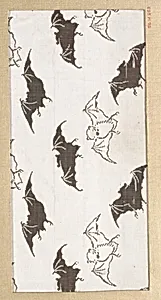
This exquisite silk textile fragment, titled simply *Piece*, hails from Japan's Edo period (16151868), a time of relative peace and cultural flourishing when intricate craftsmanship thrived. Woven in the 18th or 19th century, modest dimensions—7 3/4 x 3 3/4 inches—suggest it may have been part of a larger garment, accessory, or decorative item. Produced by an unknown artist, it exemplifies the mastery of Japanese weaving techniques, where silk threads are meticulously interlaced to create detailed patterns directly in the loom, a labor-intensive process that highlighted the weaver's skill. The design features bats, a motif rich in cultural symbolism. In Japanese folklore, bats represent good fortune and longevity—their name *komori* echoes *fuku* (happiness)—and they often appear in textiles as auspicious emblems for prosperity. This woven silk piece captures their dynamic forms with elegant precision, showcasing the Edo era's blend of everyday utility and artistic refinement in Asian textiles. A generous gift to the Metropolitan Museum of Art from Mr. and Mrs. H. O. Havemeyer in 1896, this work invites visitors to appreciate the subtle beauty of Japan's textile heritage, where even small fragments whisper stories of tradition and joy.