
Piece
Unknown Artist
18th–19th century
Medium
Silk
Dimensions
5 x 1 1/2 in. (12.70 x 3.81 cm)
Classification
Textiles-Woven
Culture & Period
Japan · Edo (1615–1868)
Department
Asian Art
Museum
Metropolitan Museum of Art, New York, NY
Credit
Gift of Mr. and Mrs. H. O. Havemeyer, 1896
Accession Number
96.14.292
Rights
Public Domain
Art Historical Context
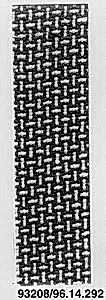
This delicate silk textile fragment, woven in Japan during the Edo period (1615–1868), offers a glimpse into the refined artistry of 18th- to 19th-century craftsmanship. Measuring just 5 x 1½ inches, it likely originates from a larger garment, sash, or decorative accessory, reflecting the era's booming textile industry. The Edo period was a time of relative peace and prosperity under the Tokugawa shogunate, fostering vibrant urban culture in cities like Kyoto and Edo (modern Tokyo), where silk weaving flourished as both a practical trade and a symbol of elegance. Crafted from luxurious silk on sophisticated looms, this piece exemplifies Japanese mastery of woven textiles. Artisans employed intricate techniques to create durable, finely textured fabrics prized for kimonos, obi sashes, and ceremonial wear. Such textiles often featured subtle patterns inspired by nature, seasons, or daily life, embodying wabi-sabi aesthetics—valuing imperfection and transience—while showcasing the wearer's social status. Generously gifted to the Metropolitan Museum of Art in 1896 by Mr. and Mrs. H. O. Havemeyer, renowned collectors of Asian art, this modest "Piece" highlights the global appreciation for Japan's textile heritage. Though unattributed to a specific artist, it stands as a testament to the anonymous genius of Edo weavers, inviting visitors to appreciate the quiet sophistication of everyday luxury.