
Piece
Unknown Artist
18th–19th century
Medium
Silk
Dimensions
8 1/4 x 8 1/4 in. (20.95 x 20.95 cm)
Classification
Textiles-Woven
Culture & Period
Japan · Edo (1615–1868)
Department
Asian Art
Museum
Metropolitan Museum of Art, New York, NY
Credit
Gift of Mr. and Mrs. H. O. Havemeyer, 1896
Accession Number
96.14.416
Rights
Public Domain
Tags
Art Historical Context
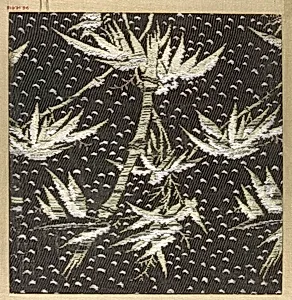
This exquisite silk textile fragment, titled simply *Piece*, hails from Japan's Edo period (16151868), a time of relative peace and cultural flourishing under the Tokugawa shogunate. Measuring just 8¼ x 8¼ inches, this square woven silk exemplifies the meticulous craftsmanship of Japanese textile artists, who elevated silk weaving into an art form. Though created by an unknown artisan, it likely emerged from workshops in regions like Kyoto or Nishijin, renowned for their intricate looms and vibrant dyes. The design features bamboo—a enduring symbol in Japanese culture representing resilience, purity, and flexibility, much like the plant that bends but does not break in storms. Woven directly into the silk threads, the motif showcases advanced techniques such as jacquard-like patterning, where warp and weft create subtle textures and depth without additional embroidery. Such small pieces were often samples, patches for garments like kimonos, or decorative inserts, reflecting the era's obsession with nature-inspired motifs amid urban sophistication. Generously gifted to the Metropolitan Museum of Art in 1896 by Mr. and Mrs. H. O. Havemeyer, prominent collectors of Asian art, this fragment offers a window into Edo Japan's material elegance. It invites visitors to appreciate how everyday luxury wove poetry from silk and bamboo.