
Piece
Unknown Artist
18th–19th century
Medium
Silk
Dimensions
4 1/4 x 5 1/4 in. (10.80 x 13.34 cm)
Classification
Textiles-Tapestries
Culture & Period
Japan · Edo (1615–1868)
Department
Asian Art
Museum
Metropolitan Museum of Art, New York, NY
Credit
Gift of Mr. and Mrs. H. O. Havemeyer, 1896
Accession Number
96.14.447
Rights
Public Domain
Tags
Art Historical Context
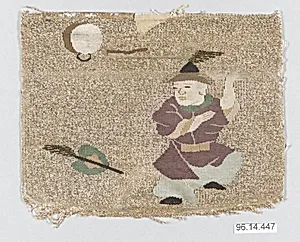
This delicate silk textile, classified as a tapestry fragment but likely part of a folding fan, hails from Japan's Edo period (16151868), a time of relative peace and cultural flourishing. just 4¼ x 5¼ inches, it captures the lively spirit of traditional performances, featuring men dancing energetically with drums—a nod to festive rituals, kabuki theater, or matsuri festivals where rhythmic drumming and dynamic movement symbolized community joy and spiritual harmony. Crafted in sumptuous silk, the piece showcases the exquisite weaving and dyeing techniques mastered by Edo artisans, who blended intricate patterns with vivid colors to create portable works of art. Fans like this were everyday luxuries for men, doubling as status symbols and storytelling devices that brought theater scenes into daily life. Its small scale highlights the precision of Japanese textile traditions, where every thread contributed to narrative depth. Generously gifted to the Metropolitan Museum of Art in 1896 by Mr. and Mrs. H. O. Havemeyer, renowned collectors of Asian art, this "Piece" invites visitors to imagine the sounds of taiko drums echoing through Edo streets, preserving a snapshot of Japan's artistic golden age.