
Piece
Unknown Artist
18th–19th century
Medium
Silk
Dimensions
6 1/2 x 5 1/4 in. (16.51 x 13.34 cm)
Classification
Textiles-Woven
Culture & Period
Japan · Edo (1615–1868)
Department
Asian Art
Museum
Metropolitan Museum of Art, New York, NY
Credit
Gift of Mr. and Mrs. H. O. Havemeyer, 1896
Accession Number
96.14.475
Rights
Public Domain
Tags
Art Historical Context
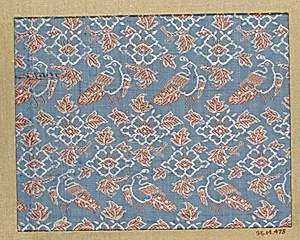
This exquisite silk textile fragment, simply titled *Piece*, hails from Japan's Edo period (16151868), a time of relative peace and cultural flourishing under the Tokugawa shogunate. Woven in the 18th or 19th century, petite dimensions—6½ x 5¼ inches—suggest it may be a sample or remnant from a larger garment, such as a kimono ori sash. Delicate motifs of flowers and leaves, rendered with precision, evoke the natural beauty central to Japanese aesthetics, symbolizing seasonal change and ephemeral elegance. Edo-era textiles like this exemplify Japan's mastery of silk weaving, a craft refined over centuries in regions like Kyoto's Nishijin district. Artisans employed sophisticated looms to create intricate patterns through techniques such as kasuri (ikat) or supplementary weft weaving, where colored silk threads were meticulously interlaced to produce vibrant, textured designs without dyes bleeding. Silk, prized for its luster and durability, held deep cultural value, adorning the elite and reflecting social status during an era when sumptuary laws regulated fabric use. Generously donated to The Metropolitan Museum of Art in 1896 by Mr. and Mrs. H. O. Havemeyer, renowned collectors of Asian art, this piece offers a window into everyday artistry. Though by an unknown maker, it captures the refined harmony of Edo design, inviting visitors to appreciate the quiet poetry woven into silk.