
Piece
Unknown Artist
18th–19th century
Medium
Silk
Dimensions
9 3/4 x 9 in. (24.77 x 22.86 cm)
Classification
Textiles-Woven
Culture & Period
Japan · Edo period (1615–1868)
Department
Asian Art
Museum
Metropolitan Museum of Art, New York, NY
Credit
Gift of Mr. and Mrs. H. O. Havemeyer, 1896
Accession Number
96.14.505
Rights
Public Domain
Art Historical Context
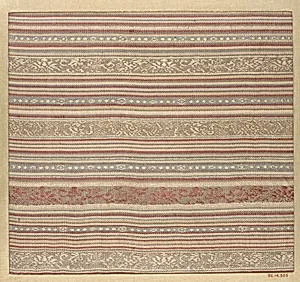
This exquisite silk textile fragment, dating to Japan's Edo period (1615–1868), offers a glimpse into the refined artistry of 18th- to 19th-century weaving traditions. Produced during a time of relative peace and prosperity under the Tokugawa shunate, such pieces were often parts of luxurious garments like kimonos or obis, showcasing Japan's mastery of silk production. Kyoto's renowned weavers, particularly in the Nishijin district, developed intricate techniques using multiple shuttles to create complex patterns without dyes bleeding—a testament to technical innovation centuries before mechanized looms. As a woven textile measuring just 9¾ x 9 inches, this "Piece" highlights the cultural significance of silk in Edo society. Silk was not merely fabric but a symbol of status, worn in theaters, festivals, and daily life, reflecting seasonal motifs, nature, or auspicious symbols that embodied wabi-sabi aesthetics—beauty in impermanence and simplicity. Though the artist remains unknown, the work exemplifies the anonymous yet highly skilled craftsmanship central to Japanese textile arts. Generously gifted to the Metropolitan Museum of Art in 1896 by Mr. and Mrs. H. O. Havemeyer, prominent collectors of Asian treasures, this fragment invites visitors to appreciate the tactile elegance and enduring legacy of Edo-era textiles in the Asian Art department.