
Piece
Unknown Artist
early 19th century
Medium
Silk
Dimensions
12 1/4 x 11 3/4 in. (31.11 x 29.84 cm)
Classification
Textiles-Woven
Culture & Period
Japan · Edo period (1615–1868)
Department
Asian Art
Museum
Metropolitan Museum of Art, New York, NY
Credit
Gift of Mr. and Mrs. H. O. Havemeyer, 1896
Accession Number
96.14.531
Rights
Public Domain
Tags
Art Historical Context
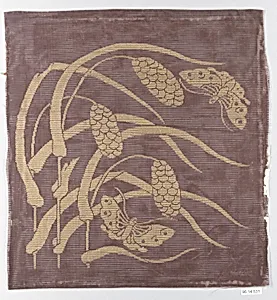
This exquisite woven silk textile, created in Japan during the early 19th century, captures the refined elegance of the Edo period (1615–1868). A time of relative peace and cultural flourishing, the era saw remarkable advancements in textile arts, with silk pieces often serving as luxurious garments, furnishings, or decorative accents for the elite. Though the artist remains unknown, this small fragment—measuring just over 12 inches square—highlights the meticulous craftsmanship of Japanese weavers who transformed delicate threads into intricate patterns. Classified as a woven textile, the piece features delicate motifs of butterflies and plants, symbols frequently celebrated in Japanese art for their associations with nature, transformation, and seasonal beauty. Silk, prized for its luster and strength, allowed artisans to achieve subtle color gradations and fine details through complex weaving techniques. Such works reflect the period’s deep appreciation for harmony between human creation and the natural world. Donated to the Metropolitan Museum of Art in 1896 by Mr. and Mrs. H. O. Havemeyer, this textile offers visitors a glimpse into Japan’s rich textile heritage and the enduring appeal of its aesthetic traditions.