
Piece
Unknown Artist
18th–19th century
Medium
Silk
Dimensions
3 1/2 x 12 3/4 in. (8.89 x 32.38 cm)
Classification
Textiles-Woven
Culture & Period
Japan · Edo period (1615–1868)
Department
Asian Art
Museum
Metropolitan Museum of Art, New York, NY
Credit
Gift of Mr. and Mrs. H. O. Havemeyer, 1896
Accession Number
96.14.641
Rights
Public Domain
Art Historical Context
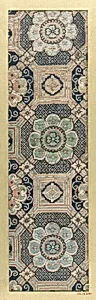
This exquisite silk textile fragment, dating to Japan's Edo period (1615–8), exemplifies the era's mastery of weaving. Produced in the 18th–19th, this narrow piece measures just 3½ x 12¾ inches, likely a remnant from a larger garment such as a kimono sash or decorative band. Gifted to the Metropolitan Museum of Art 1896 by Mr. and Mrs. H. O. Havemeyer, resides in the Asian Art department, highlighting the museum's commitment to preserving Japan's textile heritage. The Edo period was a golden age of peace and prosperity, fostering intricate craftsmanship in silk weaving. Artisans employed sophisticated techniques like kasuri (ikat) or supplementary weft patterning—common in woven textiles—to create luxurious fabrics for the rising merchant class and samurai elite. Silk, prized for its luster and durability, symbolized status and was often dyed with vibrant natural pigments derived from plants and insects. Though the artist remains unknown, this piece reflects the cultural zenith of Japanese textiles, where everyday luxury intertwined with nature-inspired motifs. Visitors can appreciate how such works bridged art and utility, offering a tactile glimpse into Edo life's refined elegance.