
Piece
Unknown Artist
18th–19th century
Medium
Silk
Dimensions
2 x 5 in. (5.08 x 12.70 cm)
Classification
Textiles-Woven
Culture & Period
Japan · Edo period (1615–1868)
Department
Asian Art
Museum
Metropolitan Museum of Art, New York, NY
Credit
Gift of Mr. and Mrs. H. O. Havemeyer, 1896
Accession Number
96.14.663
Rights
Public Domain
Art Historical Context
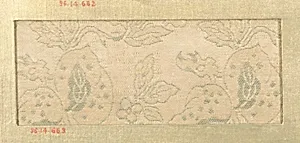
This delicate silk textile fragment, simply titled *Piece*, hails from Japan's Edo period (16151868), a time of relative peace and cultural flourishing under the Tokugawa shogunate. Measuring just 2 x 5 inches, this woven artwork exemplifies the exquisite craftsmanship of Japanese textile artisans, who transformed fine silk threads into luxurious fabrics for kimonos, obi sashes, and ceremonial garments. During the 18th–19th centuries, silk production boomed in regions like Kyoto Nishijin, where weavers employed sophisticated techniques such as twill or satin weaves to create shimmering surfaces and subtle patterns, often inspired by nature, seasons, or auspicious motifs. Though the artist remains unknown, the piece reflects the Edo era's emphasis on refined elegance and everyday luxury, accessible to the growing merchant class. Woven silk held profound cultural significance in Japan, symbolizing status and artistry; its labor-intensive production involved sericulture, dyeing with natural pigments, and intricate loom work passed down through guilds. Donated to the Metropolitan Museum of Art in 1896 by collectors Mr. and Mrs. H. O. Havemeyer, renowned for their Asian art acquisitions, this small treasure offers a glimpse into Japan's textile heritage, inviting visitors to appreciate the precision and beauty hidden in humble fragments.