
Piece
Unknown Artist
18th–19th century
Medium
Silk
Dimensions
5 1/2 x 3 1/4 in. (13.97 x 8.26 cm)
Classification
Textiles-Woven
Culture
Japan
Department
Asian Art
Museum
Metropolitan Museum of Art, New York, NY
Credit
Gift of Mr. and Mrs. H. O. Havemeyer, 1896
Accession Number
96.14.808
Rights
Public Domain
Art Historical Context
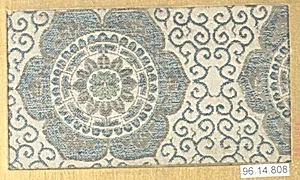
This delicate silk textile fragment, simply titled *Piece*, hails from Japan during the 18th–19th centuries, a time spanning the opulent Edo period and the transformative early Meiji era. Measuring just 5½ x 3¼ inches, it exemplifies the exquisite finesse of Japanese woven textiles, crafted from lustrous silk that would have shimmered in the light. As a woven piece in the Metropolitan Museum of Art's Asian Art collection, it likely served as part of a larger garment, such as a kimono or obi sash, reflecting Japan's mastery of sericulture and loom work. In Japanese culture, silk weaving was both an art form and an economic powerhouse, with regions like Nishijin in Kyoto renowned for intricate patterns and dyes derived from natural sources. Though the artist remains unknown, this fragment highlights the period's emphasis on refined craftsmanship, where every thread contributed to harmonious designs symbolizing nature, seasons, or prosperity. Its small scale invites close inspection, revealing the technical precision that made Japanese textiles coveted worldwide. Generously gifted to the Met in 1896 by Mr. and Mrs. H. O. Havemeyer, prominent collectors of Asian art, this piece offers a tangible link to Japan's textile heritage. Visitors can appreciate how such works bridged everyday life and high artistry, preserving cultural stories in silk.