
Piece
Unknown Artist
18th–19th century
Medium
Silk
Dimensions
10 1/2 x 5 1/4 in. (26.67 x 13.34 cm)
Classification
Textiles-Woven
Culture
Japan
Department
Asian Art
Museum
Metropolitan Museum of Art, New York, NY
Credit
Gift of Mr. and Mrs. H. O. Havemeyer, 1896
Accession Number
96.14.833
Rights
Public Domain
Art Historical Context
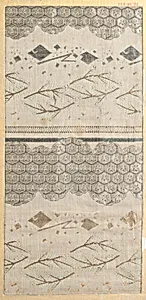
This exquisite silk textile fragment, dating to Japan's 18th–19th centuries, exemplifies the mastery of woven fabrics during the late Edo and early Meiji. Measuring a compact 10½ x 5¼ inches, it hails from a time when silk production flourished in regions like Kyoto and Nishijin, where weavers crafted luxurious materials for clothing, furnishings, and ceremonial use. As a gift to the Metropolitan Museum of Art collectors Mr. and Mrs. H. O. Havemeyer in 1896, it reflects early Western enthusiasm for Japanese artistry amid the global Japonisme craze. Woven silk held profound cultural significance in Japan, symbolizing refinement, status, and seasonal harmony. Artisans employed sophisticated techniques such as plain weaves or subtle patterning—often with motifs drawn from nature, theater, or daily life—to create durable yet delicately textured pieces. Though the exact design of this fragment remains understated in records, its preservation highlights the enduring appeal of these textiles, which influenced global fashion and design. Today, in the Met's Asian Art department, this "Piece" invites visitors to appreciate the tactile beauty and technical ingenuity of Japanese weaving traditions, bridging centuries of craftsmanship with modern admiration.