
Piece
Unknown Artist
18th–19th century
Medium
Silk
Dimensions
4 1/4 x 3 1/4 in. (10.80 x 8.26 cm)
Classification
Textiles-Woven
Culture
Japan
Department
Asian Art
Museum
Metropolitan Museum of Art, New York, NY
Credit
Gift of Mr. and Mrs. H. O. Havemeyer, 1896
Accession Number
96.14.916
Rights
Public Domain
Tags
Art Historical Context
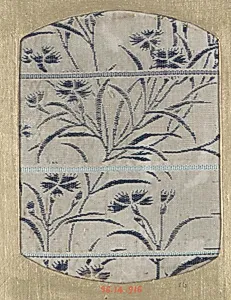
This delicate silk textile fragment, simply titled *Piece*, hails from Japan during the 18th–19th centuries, a golden era for the country's renowned weaving traditions. Measuring just 4¼ x 3¼ inches, this woven masterpiece showcases intricate floral motifs—a hallmark of Japanese decorative arts that celebrated nature's beauty, seasons, and impermanence. Likely part of a larger garment like a kimono or obi sash, it exemplifies the exquisite craftsmanship of Edo-period (1603–1868) and early Meiji-era (1868–1912) artisans, who transformed silk into luxurious symbols of status and refinement. Woven silk was a pinnacle of technical innovation in Japan, where master weavers employed complex looms to interlace fine threads, creating textured patterns without dyes or paints. The floral designs here evoke the elegance of cherry blossoms or irises, motifs deeply rooted in Japanese aesthetics like *mono no aware*—a poignant appreciation of transience. Such pieces were prized by samurai, merchants, and nobility, blending functionality with artistry. Generously gifted to the Metropolitan Museum of Art in 1896 by collectors Mr. and Mrs. H. O. Havemeyer, this fragment offers a tangible glimpse into Japan's textile legacy. Though its creator remains unknown, it whispers of the anonymous genius behind one of Asia's most enduring crafts.