
Piece
Unknown Artist
18th–19th century
Medium
Silk
Dimensions
3 1/2 x 3 1/2 in. (8.89 x 8.89 cm)
Classification
Textiles-Woven
Culture
Japan
Department
Asian Art
Museum
Metropolitan Museum of Art, New York, NY
Credit
Gift of Mr. and Mrs. H. O. Havemeyer, 1896
Accession Number
96.14.958
Rights
Public Domain
Tags
Art Historical Context
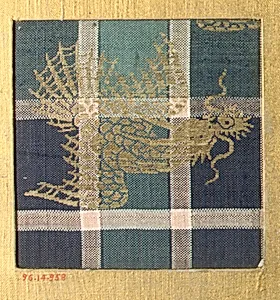
This exquisite silk textile fragment, titled simply *Piece*, hails from Japan during the 18th–19th century, a time when Edo-period artisans mastered intricate weaving techniques. Measuring just 3½ x 3½ inches, this small square exemplifies the precision of Japanese silk production, likely created on a loom using fine threads to produce a luxurious sheen and detailed patterns. Donated to the Metropolitan Museum of Art in 1896 by Mr. and Mrs. H. O. Havemeyer, generous collectors of Asian art, it now resides in the museum's Asian Art department as a prime example of woven textiles. The motif of dragons—powerful, mythical creatures in Japanese culture—adds profound symbolism. Dragons often represented imperial authority, protection, and control over water and weather, evoking wishes for prosperity and strength. Woven directly into the silk, these designs showcase the weaver's skill in integrating color and texture without embroidery, a hallmark of traditional *kasuri* or brocade-like methods. Though the artist remains unknown, such pieces were prized for clothing, ceremonial robes, or decorative patches, reflecting Japan's rich textile heritage. Visitors will appreciate this tiny treasure for its delicate beauty and cultural depth, a window into the artistry that adorned daily and ritual life centuries ago.