
Piece
Unknown Artist
18th–19th century
Medium
Silk
Dimensions
6 3/4 x 4 1/4 in. (17.15 x 10.80 cm)
Classification
Textiles-Woven
Culture
Japan
Department
Asian Art
Museum
Metropolitan Museum of Art, New York, NY
Credit
Gift of Mr. and Mrs. H. O. Havemeyer, 1896
Accession Number
96.14.963
Rights
Public Domain
Art Historical Context
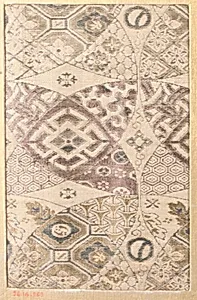
This delicate silk textile fragment, simply titled *Piece*, originates from Japan during the 18th19th century—a period spanning the late Edo era and early Meiji transition, when textile production flourished as a cornerstone of Japanese craftsmanship. Classified as a woven textile in the Metropolitan Museum of Art's Asian Department, it measures a modest 6 3/4 x 4 1/4 inches (17.15 x 10.80 cm), suggesting it may be a sample or remnant from a larger garment or decorative object. Silk, prized for its luster and durability, was a prestigious medium in Japanese culture, woven on intricate looms to create patterns that conveyed elegance and status. Techniques honed over centuries allowed artisans to interlace threads with precision, producing textures ideal for kimonos, obi sashes, or ceremonial fabrics. Though the specific design and unknown artist limit details, such pieces highlight Japan's mastery of silk weaving, an art form that blended utility with aesthetic refinement. Acquired as a gift from Mr. and Mrs. H. O. Havemeyer in 1896, this work reflects early Western fascination with Japanese art amid global trade expansions. It invites visitors to ponder the tactile beauty and cultural depth preserved in these intimate artifacts.