
Piece
Unknown Artist
18th–19th century
Medium
Silk
Dimensions
3 1/4 x 5 in. (8.26 x 12.70 cm)
Classification
Textiles-Woven
Culture
Japan
Department
Asian Art
Museum
Metropolitan Museum of Art, New York, NY
Credit
Gift of Mr. and Mrs. H. O. Havemeyer, 1896
Accession Number
96.14.998
Rights
Public Domain
Art Historical Context
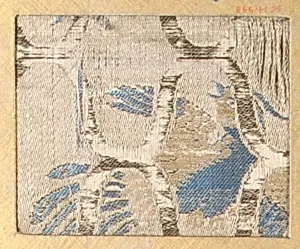
This exquisite silk textile fragment, known simply as *Piece*, hails from Japan during the 18th–19th, a time when the country’s textile arts flourished amid the Edo period’s cultural refinement and the dawn of the Meiji era modernization. Measuring just 3¼ x 5 inches (8.26 x 12.70 cm), this woven treasure exemplifies the meticulous craftsmanship of Japanese weavers, who transformed fine silk threads into luxurious fabrics prized for kimonos, obi sashes, and ceremonial garments. Silk, Japan’s premier export and a symbol of elegance, was woven on sophisticated looms that allowed for intricate patterns and textures, reflecting both technical mastery and aesthetic harmony. In Japanese culture, textiles like this were more than utilitarian—they embodied artistry, social status, and seasonal motifs drawn from nature. Woven silks often featured subtle designs achieved through complex techniques, showcasing the weaver’s skill in balancing shine, color, and durability. Though the artist remains unknown, such pieces highlight the anonymous genius of artisan workshops, where innovation thrived. Generously gifted to the Metropolitan Museum of Art in 1896 by Mr. and Mrs. H. O. Havemeyer, renowned collectors of Asian and Impressionist art, this fragment invites us to appreciate Japan’s enduring legacy in textile innovation, bridging everyday beauty with profound cultural depth.