
Piece
Unknown Artist
18th–19th century
Medium
Silk
Dimensions
3 1/4 x 6 1/4 in. (8.26 x 15.88 cm)
Classification
Textiles-Woven
Culture
Japan
Department
Asian Art
Museum
Metropolitan Museum of Art, New York, NY
Credit
Gift of Mr. and Mrs. H. O. Havemeyer, 1896
Accession Number
96.14.1076
Rights
Public Domain
Art Historical Context
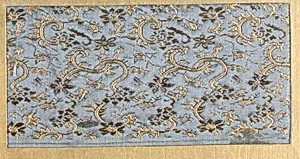
This delicate silk *Piece*, crafted by an unknown Japanese artist in the 18th–19th century, exemplifies refined artistry of Edo-period (1603–1868) and early Meiji-era textiles. Measuring just 3¼ x 6¼ inches, this woven fragment likely served as a sample or detail from a larger garment, such as a kimono ori sash. Japanese silk weaving reached extraordinary heights during this time, with artisans employing intricate techniques like *kasuri* (ikat) or supplementary wefts to create subtle patterns, textures, and shimmering effects that captured the elegance of nature and seasonal motifs. Silk, prized for its luster and durability, was a cornerstone of Japan's economy and culture, produced in renowned centers like Kyoto's Nishijin district. These textiles were not mere fabric but symbols of social status, worn in daily life, festivals, and ceremonies, blending functionality with aesthetic sophistication. The precision of handloom weaving—often a family craft passed down generations—highlights the anonymous mastery behind Japan's textile legacy. Generously gifted to the Metropolitan Museum of Art in 1896 by Mr. and Mrs. H. O. Havemeyer, prominent collectors of Asian art, this piece invites us to appreciate the quiet brilliance of everyday artistry. A testament to cross-cultural exchange, it bridges 19th-century American tastes with Japan's enduring textile traditions.