
Piece
Unknown Artist
18th–19th century
Medium
Silk
Dimensions
2 x 2 3/4 in. (5.08 x 6.99 cm)
Classification
Textiles-Woven
Culture
Japan
Department
Asian Art
Museum
Metropolitan Museum of Art, New York, NY
Credit
Gift of Mr. and Mrs. H. O. Havemeyer, 1896
Accession Number
96.14.1086
Rights
Public Domain
Art Historical Context
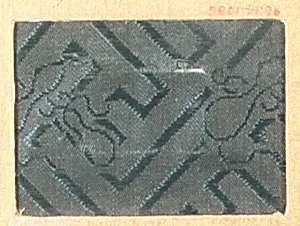
This delicate silk textile fragment, titled simply *Piece*, hails from Japan during the 18th–19th centuries, a time when the country’s weaving traditions reached extraordinary heights of refinement. Measuring just 2 x 2¾ inches (5.08 x 6.99 cm), this diminutive woven artwork exemplifies the precision of Japanese textile craftsmanship from the late Edo period into the early Meiji era. Silk, prized for its luster and durability, was a cornerstone of Japanese luxury goods, often produced in renowned centers like Kyoto’s Nishijin district. As a woven textile, it showcases the intricate loom techniques mastered by anonymous artisans, who interwove fine silk threads to create patterns that reflected nature, seasons, or auspicious motifs—hallmarks of Japan’s aesthetic philosophy of wabi-sabi and refined simplicity. Such small pieces were likely samples, patches from larger garments like kimonos, or treasures collected by connoisseurs, highlighting silk’s role in daily life, social status, and export trade. Generously gifted to the Metropolitan Museum of Art in 1896 by Mr. and Mrs. H. O. Havemeyer, prominent collectors of Asian art, this fragment invites us to marvel at Japan’s enduring textile legacy. Though its exact design remains unrecorded here, it whispers of a world where every thread told a story.