
Piece
Unknown Artist
18th–19th century
Medium
Silk
Dimensions
4 3/4 x 3 1/2 in. (12.07 x 8.89 cm)
Classification
Textiles-Woven
Culture
Japan
Department
Asian Art
Museum
Metropolitan Museum of Art, New York, NY
Credit
Gift of Mr. and Mrs. H. O. Havemeyer, 1896
Accession Number
96.14.1275
Rights
Public Domain
Tags
Art Historical Context
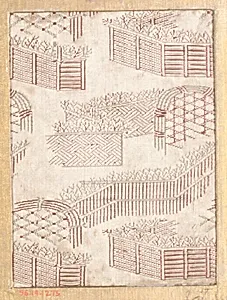
This exquisite silk textile fragment simply titled *Piece*, hails from Japan during the 18th19th century, a period when Edo-period craftsmanship flourished in weaving intricate patterns for clothing, furnishings, and ceremonial items. Measuring just 4 3/4 x 3 1/2 inches, its diminutive size suggests it may be a sample or remnant preserved for its masterful design, which features motifs of fences—evocative of traditional Japanese gardens, architecture, or rural landscapes that symbolized harmony with nature. Woven from fine silk, a luxurious material central to Japanese textile arts, this piece showcases the precision of weaving techniques like plain or twill structures, where threads are dyed and interlaced to create durable, vibrant patterns. Silk's sheen and strength made it ideal for kimonos and obi sashes, reflecting social status and seasonal aesthetics. The fence imagery, common in ukiyo-e-inspired designs, might allude to boundaries, seclusion, or the beauty of everyday scenes, underscoring Japan's appreciation for subtle, poetic realism. Generously gifted to the Metropolitan Museum of Art in 1896 by Mr. and Mrs. H. O. Havemeyer, renowned collectors of Asian art, this textile offers a window into Japan's artisanal legacy. Though by an unknown artist, it exemplifies the anonymous mastery of regional workshops, inviting visitors to ponder the hands that wove such delicate beauty centuries ago.