
Piece
Unknown Artist
18th–19th century
Medium
Silk
Dimensions
2 1/4 x 6 3/4 in. (5.71 x 17.15 cm)
Classification
Textiles-Woven
Culture
Japan
Department
Asian Art
Museum
Metropolitan Museum of Art, New York, NY
Credit
Gift of Mr. and Mrs. H. O. Havemeyer, 1896
Accession Number
96.14.1302
Rights
Public Domain
Art Historical Context
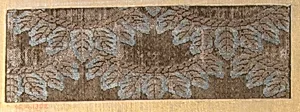
This delicate silk fragment, titled simply *Piece*, hails from Japan during the 18th–19th centuries, a time spanning the opulent Edo period and the transformative early Meiji era. Measuring just 2¼ x 6¾ inches, it exemplifies the exquisite finesse of Japanese woven textiles, crafted from lustrous silk—a material central to Japan's economy and artistry. Donated to the Metropolitan Museum Art in 1896 by collectors Mr. and Mrs. H. O. Havemeyer, it reflects the growing Western fascination with Japanese aesthetics at the turn of the century. Woven textiles like this were integral to daily life and high fashion, often used in kimonos, obi sashes, or decorative accessories. Silk production thrived in regions like Nishijin in Kyoto, where weavers employed intricate techniques such as plain or twill weaves to create durable shimmering fabrics. Though the exact design remains unspecified, such pieces highlight Japan's mastery of natural dyes and loom work, balancing functionality with subtle elegance under strict sumptuary laws that regulated luxury in clothing. In the Asian Art collection, this modest artifact invites visitors to ponder the cultural reverence for textiles as wearable art, bridging personal adornment and imperial tradition. A testament to anonymous craftsmanship, it whispers stories of Japan's silken legacy.