
Piece
Unknown Artist
18th–19th century
Medium
Silk
Dimensions
4 3/4 x 4 in. (12.07 x 10.16 cm)
Classification
Textiles-Woven
Culture
Japan
Department
Asian Art
Museum
Metropolitan Museum of Art, New York, NY
Credit
Gift of Mr. and Mrs. H. O. Havemeyer, 1896
Accession Number
96.14.1363
Rights
Public Domain
Art Historical Context
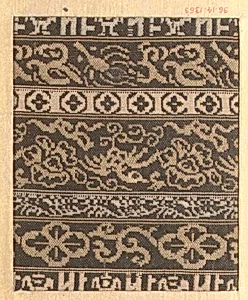
This exquisite silk textile fragment, titled simply *Piece*, hails from Japan during the 18th19th centuries, a time when the country’s Edo and early Meiji periods flourished with masterful craftsmanship. Measuring just 4¾ x 4 inches (12.07 x 10.16 cm), this small square exemplifies the precision of Japanese silk production, likely intended as part of a larger garment like a kimono ori sash. Woven textiles were central to Japanese culture, symbolizing status, artistry, and the ingenuity of regional weaving centers such as Nishijin in Kyoto, where silk threads were meticulously interlaced to create luxurious patterns and textures. The medium of silk underscores its historical significance: Japan was a global leader in sericulture, transforming delicate cocoons into shimmering fabrics prized for their luster and durability. These pieces often featured motifs drawn from nature, seasons, or folklore, reflecting the aesthetic philosophy of *wabi-sabi*—beauty in imperfection and transience. Though the artist remains unknown, the work highlights anonymous artisans whose skills elevated everyday textiles into wearable art. Generously gifted to The Metropolitan Museum of Art in 1896 by Mr. and Mrs. H. O. Havemeyer, renowned collectors of Asian treasures, this piece invites visitors to appreciate the tactile elegance of Japan’s textile heritage up close. A testament to enduring cultural exchange, it bridges centuries, whispering stories of imperial elegance and meticulous tradition.