
Piece
Unknown Artist
18th–19th century
Medium
Silk
Dimensions
5 1/4 x 6 1/4 in. (13.34 x 15.88 cm)
Classification
Textiles-Woven
Culture
Japan
Department
Asian Art
Museum
Metropolitan Museum of Art, New York, NY
Credit
Gift of Mr. and Mrs. H. O. Havemeyer, 1896
Accession Number
96.14.1722
Rights
Public Domain
Art Historical Context
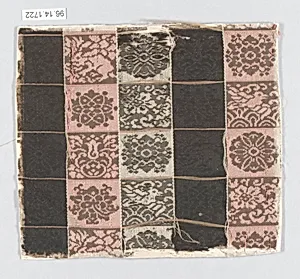
This exquisite silk *Piece* from 18th–19th Japan offers a glimpse into the masterful textile traditions of the Edo and early Meiji periods. Measuring just 5¼ x 6¼ inches, this woven fragment exemplifies the and finesse of Japanese silk, a craft honed over centuries in regions like Kyoto and Nishijin. Silk, prized for its luster and durability, was a cornerstone of Japanese export and domestic luxury, adorning kimonos, obi sashes, and ceremonial garments that reflected social status and seasonal motifs. As a classified woven textile, it highlights techniques such as jacquard-like patterning or ikat resists, though specifics remain enigmatic due to the unknown artist. These pieces often featured intricate designs inspired by nature—cherry blossoms, cranes, or waves—symbolizing harmony and impermanence in Japanese aesthetics. Donated to the Metropolitan Museum of Art in 1896 by collectors Mr. and Mrs. H. O. Havemeyer, it joins a rich trove of Asian Art, underscoring early Western fascination with Japonisme. Today, such fragments invite us to appreciate the labor-intensive artistry behind Japan's silk industry, which powered economic and cultural exchange. A small treasure, it whispers stories of skilled weavers whose innovations influenced global fashion.