
Piece
Unknown Artist
18th–19th century
Medium
Silk
Dimensions
3 1/4 x 4 1/4 in. (8.26 x 10.80 cm)
Classification
Textiles-Woven
Culture
Japan
Department
Asian Art
Museum
Metropolitan Museum of Art, New York, NY
Credit
Gift of Mr. and Mrs. H. O. Havemeyer, 1896
Accession Number
96.14.1886
Rights
Public Domain
Art Historical Context
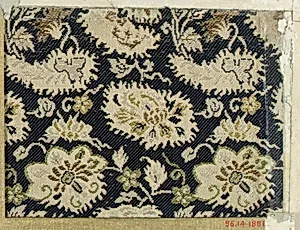
This delicate silk textile fragment, titled simply *Piece*, hails from Japan during the 18th–19th, a time when the country’s Edo-period craftsmanship reached exquisite heights. Measuring just 3¼ x 4¼ inches, this small woven treasure exemplifies the finesse of Japanese textile arts, where silk—prized for its luster and durability—was transformed into everyday luxuries like kimono sashes or decorative inserts. Woven textiles like this were not mere fabric but canvases for artistic expression, often featuring intricate patterns that reflected seasonal motifs, nature, or auspicious symbols, showcasing the weaver's mastery. The significance of such pieces lies in Japan's long tradition of silk production, centered in regions like Nishijin in Kyoto, where guilds perfected complex loom techniques. These methods allowed for pictorial designs woven directly into the cloth, blending utility with artistry and symbolizing social status. As a cultural artifact, it highlights how textiles embodied Japan's aesthetic philosophy of *wabi-sabi*—appreciating imperfection and transience. Generously gifted to the Metropolitan Museum of Art in 1896 by Mr. and Mrs. H. O. Havemeyer, renowned collectors of Asian art, this fragment invites us to marvel at the anonymous artisan's skill, preserving a slice of Japan's opulent textile heritage for modern eyes.