
Piece
Unknown Artist
18th–19th century
Medium
Silk
Dimensions
7 1/2 x 7 3/4 in. (19.05 x 19.68 cm)
Classification
Textiles-Woven
Culture
Japan
Department
Asian Art
Museum
Metropolitan Museum of Art, New York, NY
Credit
Gift of Mr. and Mrs. H. O. Havemeyer, 1896
Accession Number
96.14.1955
Rights
Public Domain
Tags
Art Historical Context
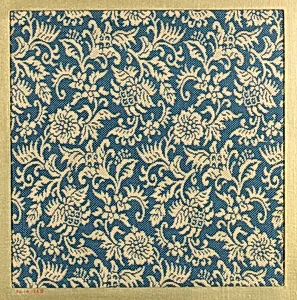
This exquisite silk textile fragment, titled simply *Piece*, hails from Japan during the 18th–19th, a golden era for the country's renowned weaving traditions. Measuring just 7½ x 7¾ inches, this small woven square captures the delicate beauty of nature through its leaf motifs, a common theme in Japanese art symbolizing seasonal change, renewal, and the ephemeral elegance of the natural world. Likely a remnant of a larger garment, obi sash, or decorative fabric, it showcases the meticulous craftsmanship of anonymous artisans who elevated textiles to fine art. Silk weaving in Edo-period (1603–1868) and early Meiji-era Japan involved sophisticated techniques like jacquard-like patterning on the loom, where threads were dyed and interlaced to create intricate designs without additional embroidery. The lustrous silk medium not only provided durability and a subtle sheen but also reflected Japan's mastery of sericulture and trade, making such pieces prized possessions among samurai, merchants, and nobility. Generously donated to the Metropolitan Museum of Art in 1896 by Mr. and Mrs. H. O. Havemeyer, avid collectors of Asian art, this *Piece* offers visitors a tangible glimpse into Japan's textile heritage. Though its creator remains unknown, it embodies the cultural reverence for harmony between pattern, material, and motif that continues to inspire global design today.