
Piece
Unknown Artist
18th–19th century
Medium
Silk
Dimensions
9 1/2 x 2 3/4 in. (24.13 x 6.99 cm)
Classification
Textiles-Woven
Culture
Japan
Department
Asian Art
Museum
Metropolitan Museum of Art, New York, NY
Credit
Gift of Mr. and Mrs. H. O. Havemeyer, 1896
Accession Number
96.14.1964
Rights
Public Domain
Art Historical Context
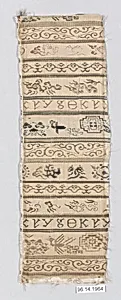
This delicate silk *Piece*, crafted by an unknown Japanese artist during the 18th–19th centuries, exemplifies the refined artistry of Edo-period (1603–1868) and early Meiji-era production. Measuring just 9½ x 2¾ inches (24.13 x 6.99 cm), this woven fragment likely served as part of a garment, sash, or decorative element, showcasing Japan's mastery of silk weaving—a labor-intensive technique involving handlooms to interlace fine threads into durable, lustrous fabrics. Silk held immense cultural significance in Japan, symbolizing luxury and status. Weavers in regions like Kyoto's Nishijin district produced such textiles for kimonos and obi sashes, blending functionality with aesthetic elegance. The medium's sheen and strength highlight innovations in sericulture and dyeing, which fueled Japan's export trade and domestic refinement during a time of isolation ending with Meiji reforms. Generously donated to the Metropolitan Museum of Art in 1896 by Mr. and Mrs. H. O. Havemeyer, this artifact offers a tangible glimpse into everyday opulence, inviting us to appreciate the anonymous hands behind Japan's textile legacy.