
Piece
Unknown Artist
18th century
Medium
Silk
Dimensions
24 1/2 x 12 1/2 in. (62.23 x 31.75 cm)
Classification
Textiles-Woven
Culture & Period
Japan · Edo period (1615–1868)
Department
Asian Art
Museum
Metropolitan Museum of Art, New York, NY
Credit
Rogers Fund, 1909
Accession Number
09.50.2372
Rights
Public Domain
Art Historical Context
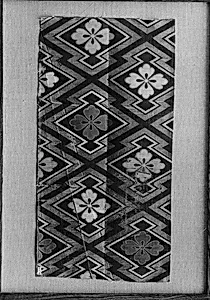
This exquisite silk textile fragment, hailing from Japan's Edo period (1615–1868), offers a glimpse into the refined artistry of 18th weaving. Measuring 24½ x 12½ inches, this woven piece exemplifies the technical mastery of Japanese artisans during a time of relative peace and cultural flourishing under the Tokugawa shunate. Acquired through the Rogers Fund in 9, it now graces the Metropolitan Museum of Art's Asian Art collection. Silk, prized for its luster and durability, was a cornerstone of Edo-era textiles, often used in luxurious garments like kimonos and obis. Woven techniques during this period allowed for intricate patterns inspired by nature, daily life, and seasonal motifs, reflecting ukiyo-e influences— the "floating world" of beauty and transience. Though the artist remains unknown, the work's survival highlights the skill of specialized workshops, where dyers and weavers collaborated to produce textiles that signified social status and aesthetic harmony. For visitors, this piece evokes the tactile elegance of Japan's textile heritage, inviting reflection on how everyday materials became canvases for profound cultural expression. A testament to enduring craftsmanship, it bridges the opulent past with our modern appreciation for artisanal legacy.